MATERIAL ACCESS
SOLVING FOR SEASONAL HABITAT LOSS
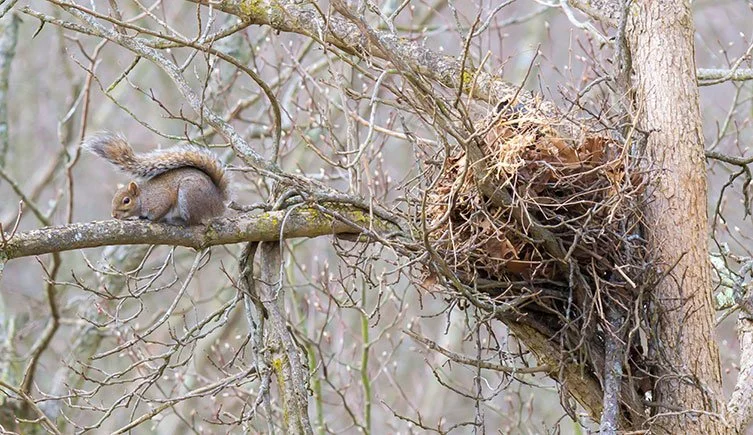
This project attempts to solve seasonal habitat loss for tree-dwelling animals. I began to think about this problem in the fall, when squirrel nests in my neighborhood became visible. Through observation, I would learn that some of the nests remained occupied, during the winter months, despite the lack of tree canopy. One day I witnessed a squirrel carrying a maple leaf in its mouth, all the way up to its nest - which are always located at the very top of the tree - only to have it fall. This experience prompted me to think about the ways architecture could support these animals by providing better access to nesting materials.
THE PROBLEM
The problems that I’ve identified are: the lack of canopy during periods of extreme weather; the distance between nests and nesting materials; and the quality of the nesting materials.
THE SOLUTION
My solution to this problem is to build a structure that is designed, primarily, to collect fallen leaves while also offering alternative shelter for animals during periods of extreme weather. The function of the structure, as a container for materials, will determine where and how its oriented on a particular site.
FUNCTION
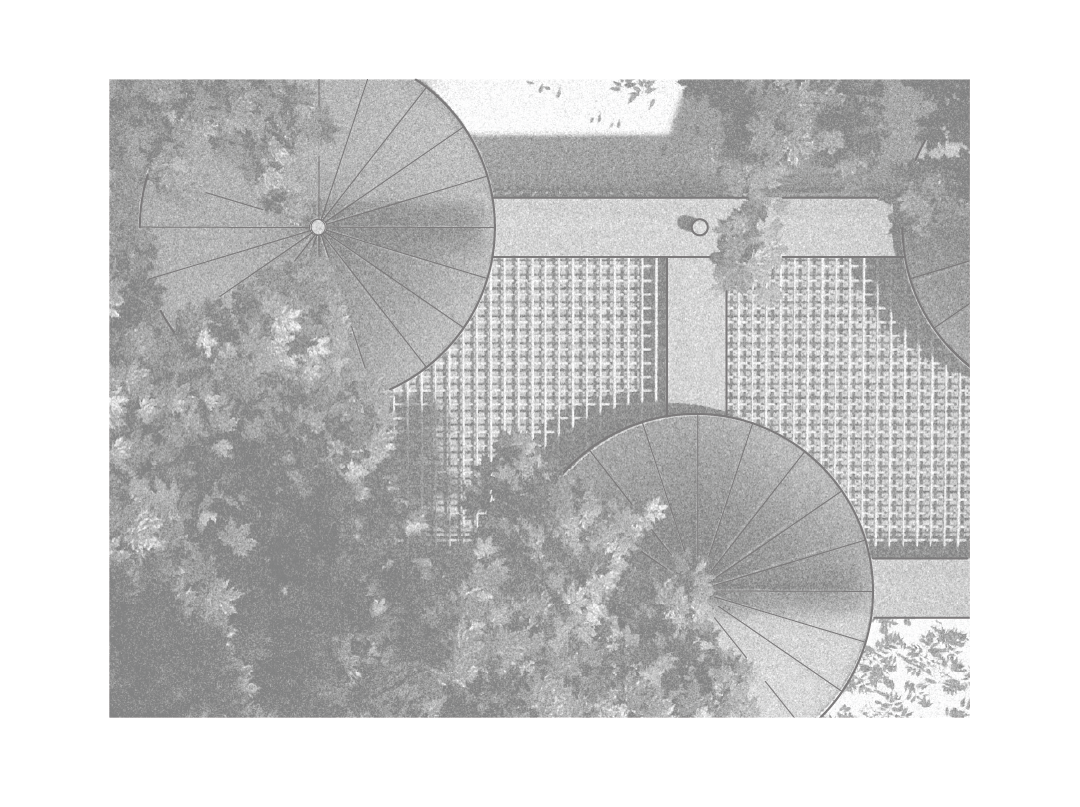
The leaves that are collected by the structure are isolated high above the ground, in the roof. This decreases the distance between the nest and the nesting materials while eliminating interactions with some of the contaminating organisms found on the ground.
ROOF
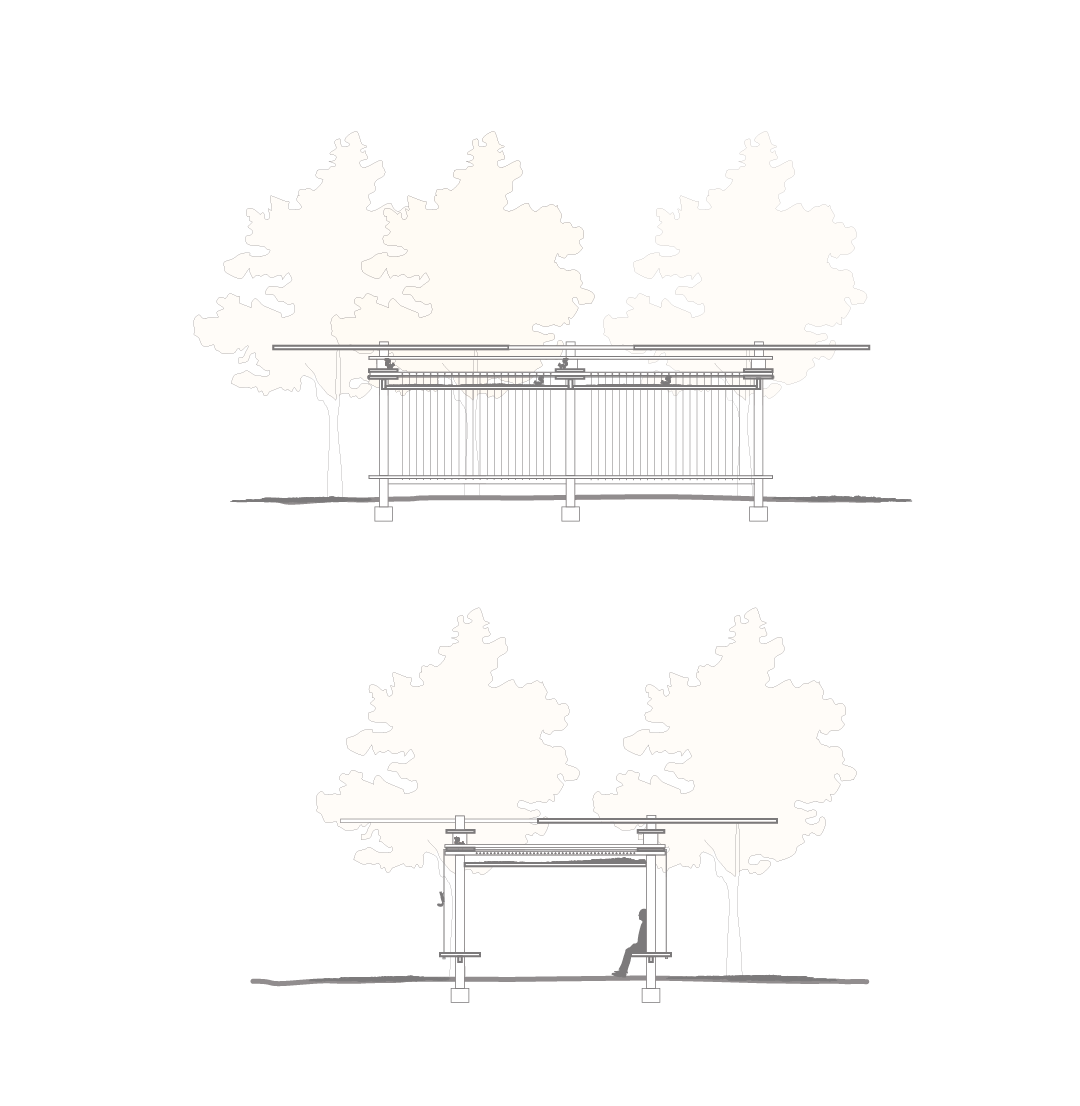
There are four major layers to the structure’s roof. Layer 1, the top-most layer, is made up of three large round discs that are designed to protect nesting animals and nesting materials from rain and snow. The discs are joined to the structure’s columns and are made of steel and glass panels. Glass was selected for its transparency, giving the illusion of open space, which is important to animals who nest in trees.
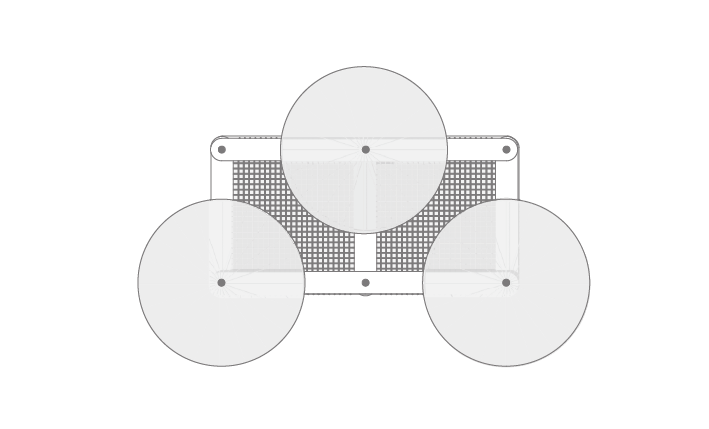
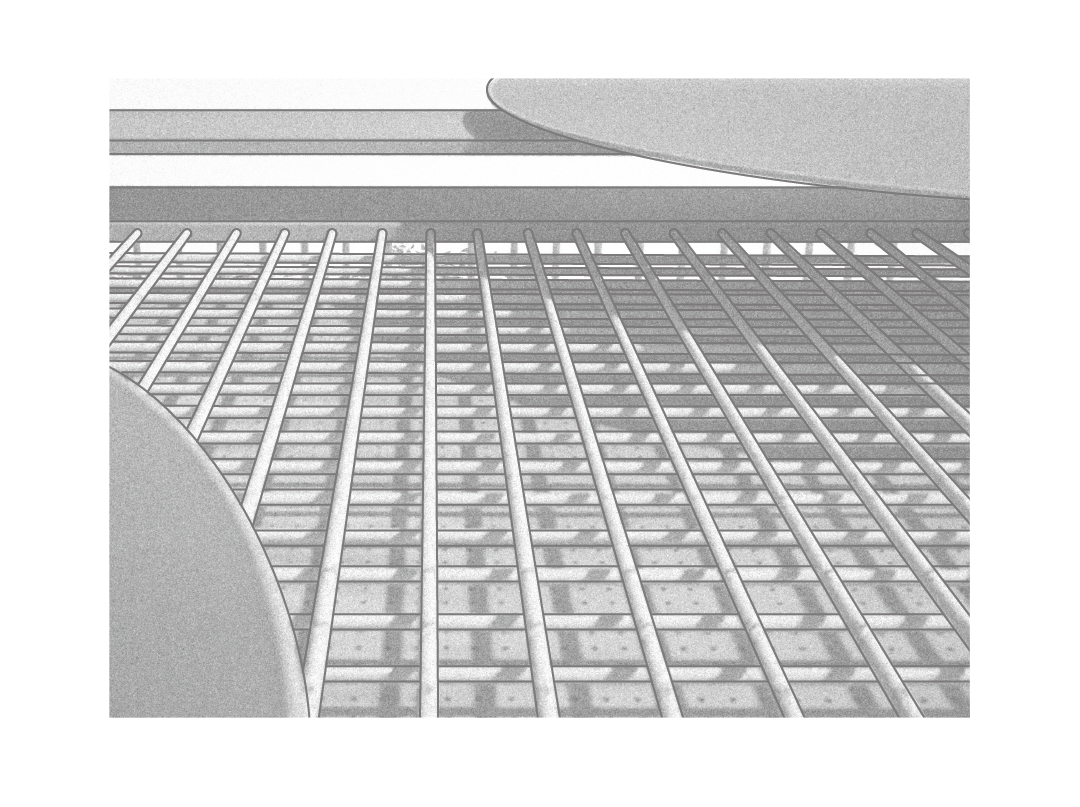
Layer 2 consists of rope that spans the width of the roof. The rope is thread through roof panels along the structure’s length, directed down, thread through lower level panels, and then fastened. The third layer consists of rope that spans the length of the roof. Together, layers 2 and 3 create a cross-hatch pattern that’s designed to catch dropped leaves. Layer 4 acts as a ceiling to those passing underneath and as a foundation for nest building animals. Small holes are punctured through this surface so that water and air are able to move freely.
Layers 2-4 are designed to support the construction of three-dimensional nests and to make it so that dropped leaves are collected at different elevations to avoid dense piles and molds.