WATER ACCESS
RESOURCE SHARING
ACCESS + SUSTAINABILITY
Sustainability is defined as [a thing’s] ability to be sustained; to continue for an extended period without interruption. Technological developments, such as dams, have allowed us continued, uniterrupted access to water - however, this benefit is only available to a commmunitys people. We’ve forgotten that there’s more to our communities than people: there are birds, squirrels, raccoons, ants, worms, cats, dogs, coyotes and hundreds of different plant species. Despite the obvious diversity, non-human community members are rarely considered in a community’s design decisions and are almost always excluded from resource-sharing.
TEMPERATURE + SAFETY
In 2025, Portland experienced a significant number of days with temperatures exceeding 80°F, including several record-breaking heat events starting as early as March. Even in the rainy months clean water is an issue since most of the pooling water in the city’s contaminated runoff.
THE SOLUTION
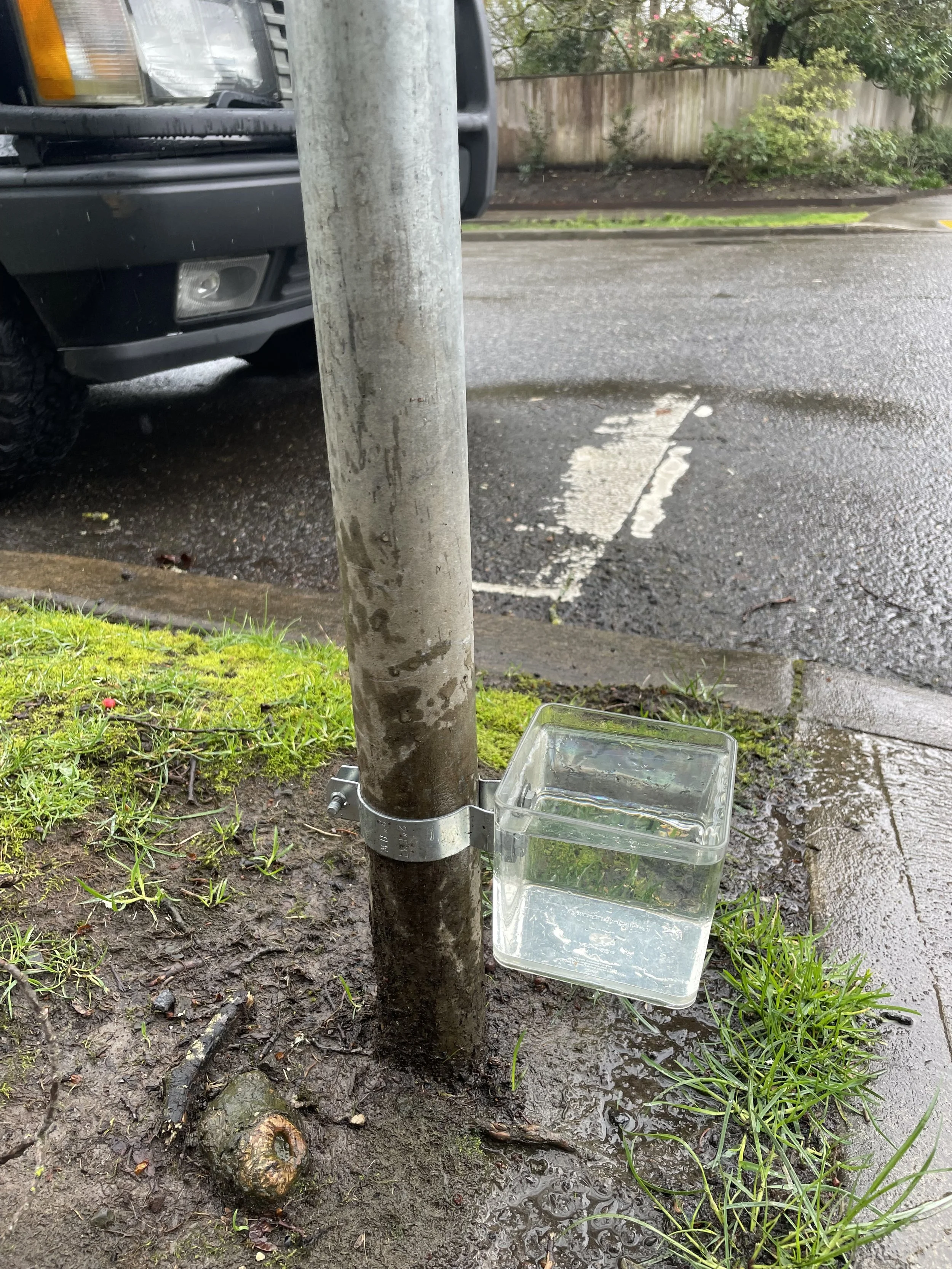
This design proposal attempts to solve the problem of contaminated and inaccessible water to non-human community members in the ladds addition neighborhood. Seven containers, known as the water troughs, have been attached to existing infrastructure in ladds addition. Each trough is emptied and re-filled twice per day to maintain cleanliness and continued access. This project has had an incredible response from the neighborhood and has been effective in, not only supplying clean water, but in creating community, inspiring similar projects, and changing habits.
CONSTRUCTION
The construction of the trough is simple and consists of two main components - the container component and the connection component. the container is a 4” x 4” x 4” clear bpa-free plastic that can hold approximately 20 fluid ounces. the container attaches to the existing infrastructure through the connection component - a no.5 zinc-plated steel conduit and pipe hanger which is designed to accomodate objects with a 2” diameter, like that of a stop sign pole.
CONNECTION
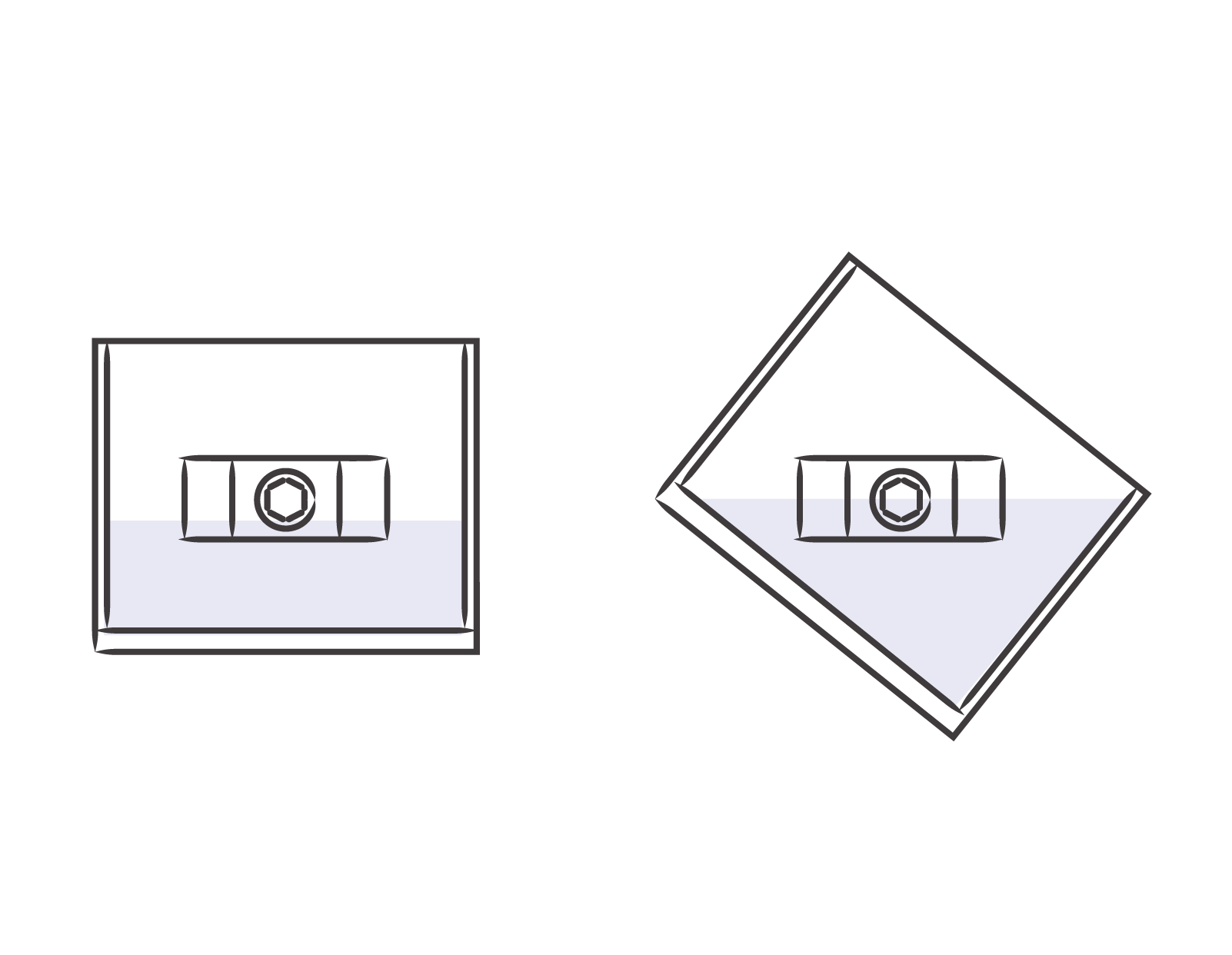
The connection between the container component and the connection component is pinned, meaning that the container is free to rotate at its support. This design allows for water to be emptied or redistributed within the container to allow for better access.
MATERIAL ACCESS
HABITAT LOSS
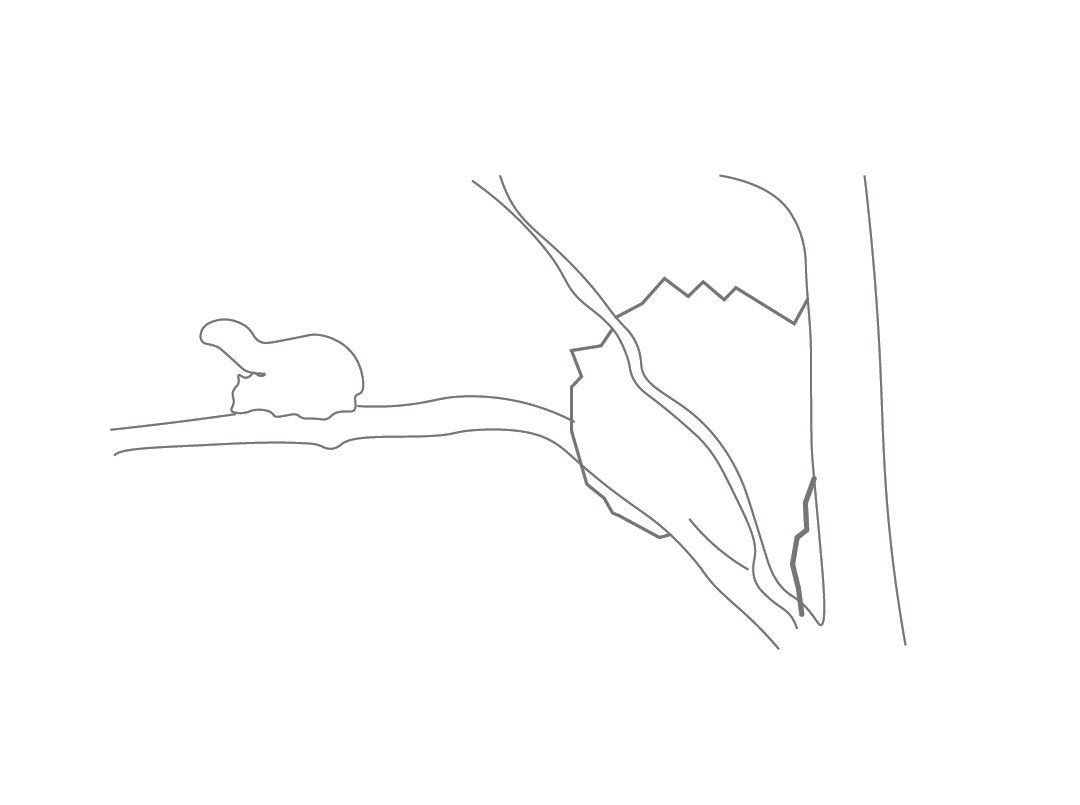
This project attempts to solve some of the problems associated with seasonal habitat loss for tree-dwelling, nest-building animals. I began to think about this problem in the fall, when squirrel nests in my neighborhood became visible. Through observation, I would learn that some of the nests remained occupied, during the winter months, despite the lack of tree canopy. One day I witnessed a squirrel carrying a maple leaf in its mouth, all the way up to its nest - which are always located at the very top of the tree - only to have it fall. This experience prompted me to think about the ways architecture could support these animals by providing better access to nesting materials.
THE PROBLEM
The problems that I’ve identified are: the lack of canopy during periods of extreme weather; the distance between nests and nesting materials; and the quality of the nesting materials.
THE SOLUTION
My solution to this problem is to build a structure that is designed, primarily, to collect fallen leaves while also simultaneously supporting the construction on three-dimensional nests. The function of the structure, as a container for materials, will determine where and how its oriented on a particular site.
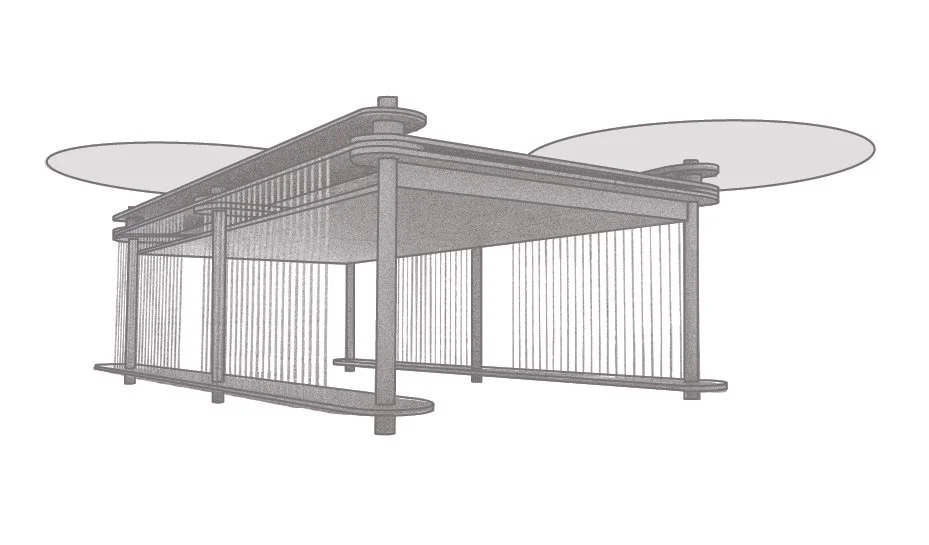
MATERIAL COLLECTION
The leaves that are collected by the structure are isolated high above the ground, in the roof, decreasing the distance between nests and nesting materials while eliminating interactions with some of the contaminating organisms found on the ground.
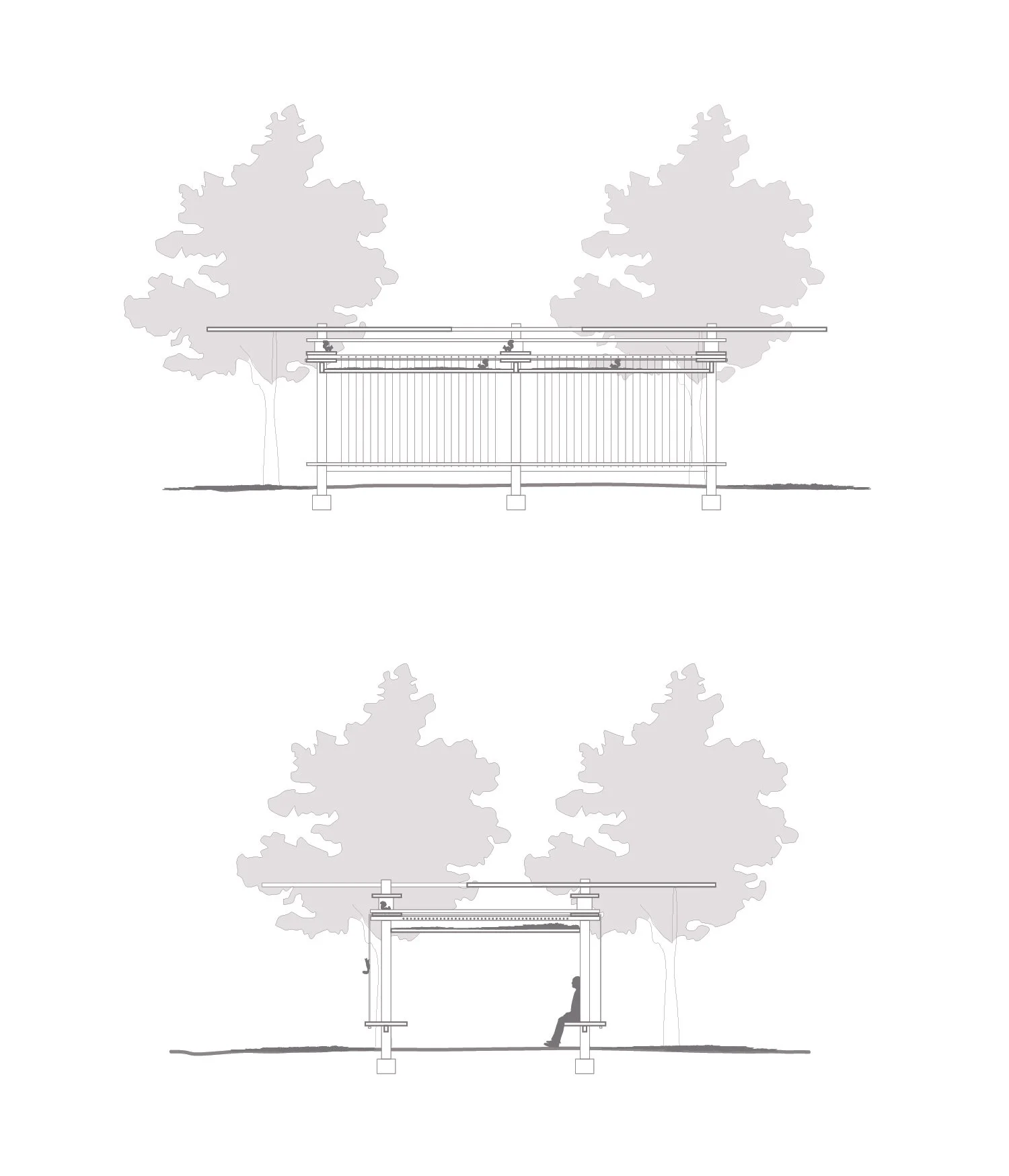
ROOF CONSTRUCTION
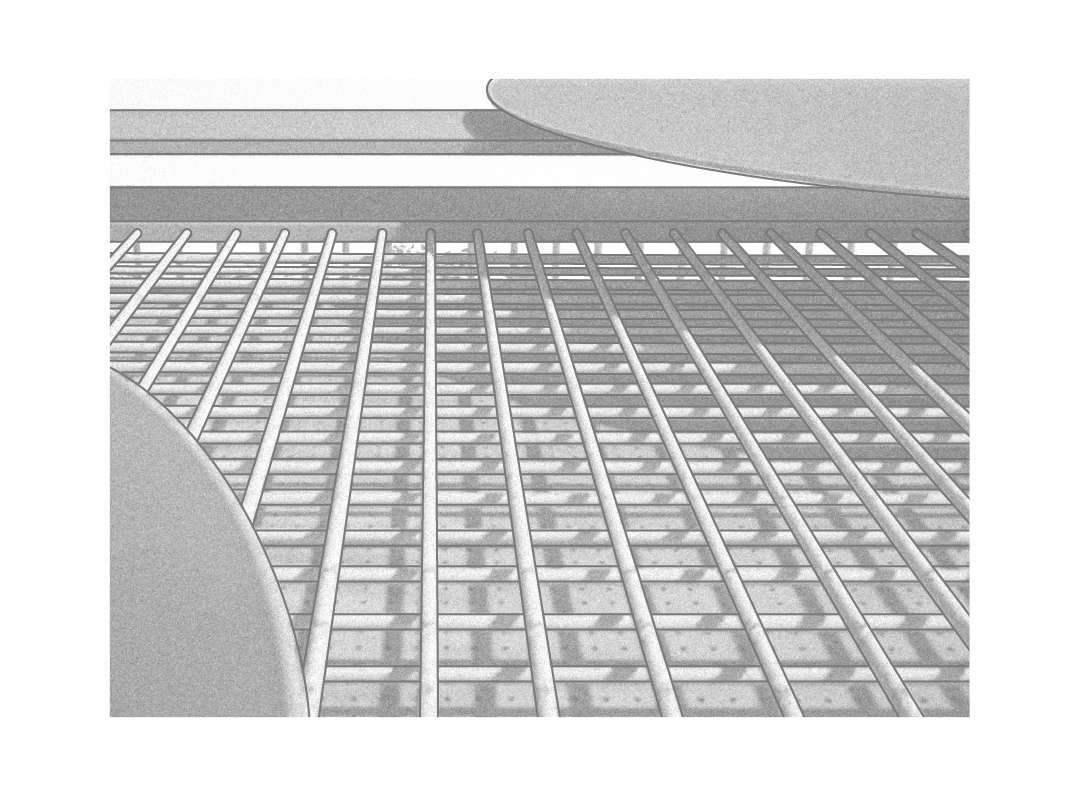
There are four major layers to the structure’s roof. Layer 1, the top-most layer, is made up of three large round discs that are designed to protect nesting animals and nesting materials from rain and snow. The discs are joined to the structure’s columns and are made of steel and glass panels. Glass was selected for its transparency, giving the illusion of open space, which is important to animals who nest in trees.
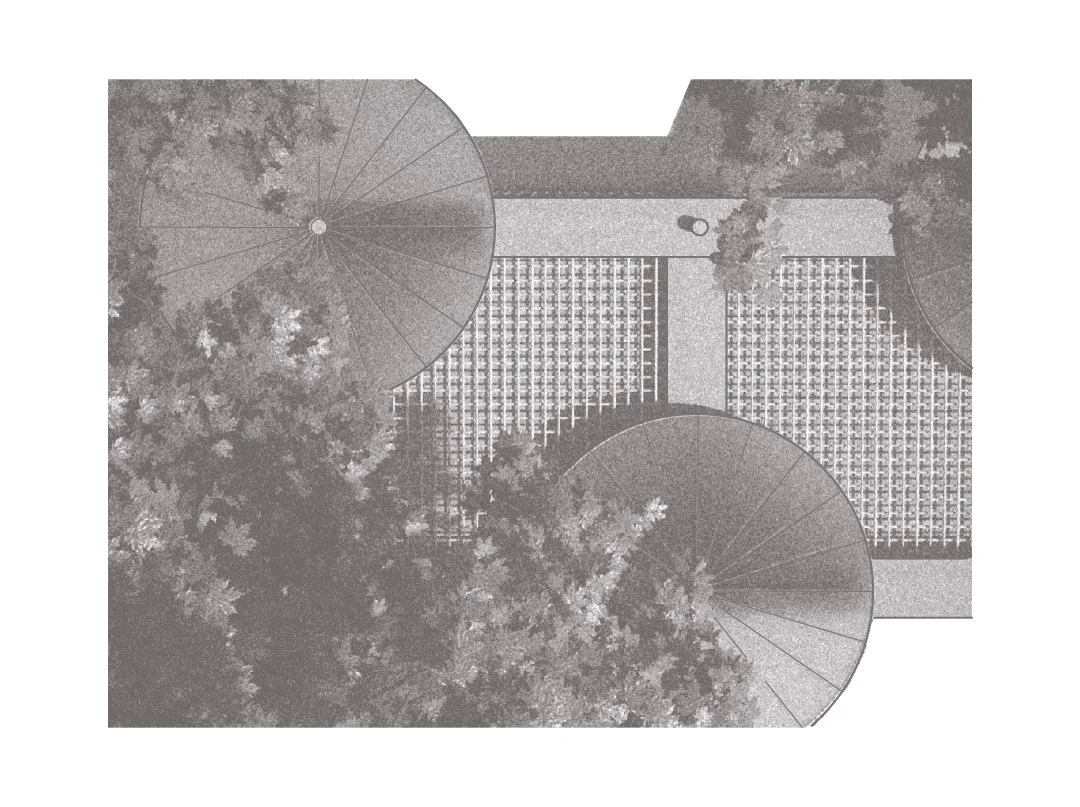
Layer 2 consists of rope that spans the width of the roof. The rope is thread through roof panels along the structure’s length, directed down, thread through lower level panels, and then fastened. The third layer consists of rope that spans the length of the roof. Together, layers 2 and 3 create a cross-hatch pattern that’s designed to catch dropped leaves. Layer 4 acts as a ceiling to those passing underneath and as a foundation for nest building animals. Small holes are punctured through this surface so that water and air are able to move freely.
Layers 2-4 are designed to support the construction of three-dimensional nests and to make it so that dropped leaves are collected at different elevations to avoid dense piles and molds.